
Discussions

We're thrilled to introduce Eliza of Cotton Socks as Glow's new discussion board moderator. The boards provide a warm welcome and community that's got its own momentum, but we thought it was time to have a little help to consistently set that tone, to faciliate and answer any questions, and to make sure that everyone feels comfortable contributing or just reading in whatever way helps.

If you have any suggestions or feedback on the community section of Glow in the Woods (the general board or the ttc/pregnancy/birth after loss board), please contact us here. We'd love to hear your thoughts.

In the past couple of years, the boards have thrived. We're so grateful for how beautifully you all hear one another and share your stories.

~ Kate 

I was bright-eyed and eager; a new ring sparkled on my left hand and I was desperate to discuss all-important topics like veil length and fresh flowers versus silks. Unfortunately, very few people around me had patience enough to match my enthusiasm for planning a wedding that was still two years in the future. Wanting to dive into this exciting new venture, and I must admit, terribly bored at work, I delved into the internet to begin researching.

And I discovered message boards for the first time. Intimidated at first, I quickly found a niche where I was comfortable, began to make friends and talked about centerpieces and choosing readings to my heart's content. That morphed into a private board of like-minded women, and forays into other arenas, like a sports board or two. It was natural to me to turn back to the world of message boards when I was again faced with something I wanted badly to discuss and had no audience for – trying to conceive and the subsequent three pregnancies were all set to a background of a popular board where it was common to discuss intimate details of your bodily functions, and where looking at something another woman peed on was exciting. All of my pregnancy with Gabriel was shared in detail with strangers that I began to grow close to through daily, unreserved contact.

Had you asked me prior to my foray into boards whether I believed people could really find friends or form real relationships of any kind on the internet, I would have scoffed. But the women I met while planning my wedding remain, to this day, nearly eight years later, among my closest friends. One of those women I met on that message board was a bridesmaid in my wedding, another flew from Canada to Texas to perform the ceremony (and several others drove and flew to attend it). They were the people who held me and supported me – albeit virtually – when Gabriel died. They are the ones who we called from the hospital at the same time we called our families. They are the ones who heard me struggling and arranged a cleaning service for my house. They are the ones who directed me gently to come here, when I was freshly grieving and desperate to be heard by someone who might understand. I came to Glow, lonely, shattered, heart torn open, needing badly to hear that I was allowed to grieve. And here I found comfort, and sustenance in the form of words and understanding that only those who have lived it can offer. Like many others, I devoured everything, back through all the archives.
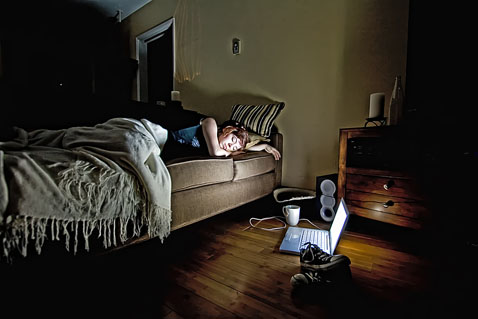
photo by corie howell

Of course, I also posted on the discussion board. In fact, the discussion board was the first place I told our story in all the horrifying detail. Once I began, the words poured out of me and were received. This was my safe place to talk, where I could take off the veneer of 'coping' and 'healing' and 'moving on' and simply be whatever I was that day - happy, sad, scared, angry or neutral.  This was the place I could rest and fully feel every emotion without gauging how it affected others; everyone understood and nodded with me.  After a time, I began to offer words of comfort and a presence to others who were joining the ranks, just as lost and bewildered and hurt as I was. It was such a relief, the constant (if sad) reassurance I was not crazy or alone. I was, and am, just grieving.

Message boards are where I feel most at home; perhaps because that is how I started on the internet back in the day. Blogs have often felt like more of a one way enterprise; perhaps because that is how I tend to view mine. So the vibrancy and the back-and-forth and the immediacy and instant gratification of a discussion board is most appealing to me and where I find my stride in this strange new world. A bit of the familiar of the old life, brought back into being.

And these boards here at Glow are the most comfortable for me. It is rare to find such an open public community that freely offers support, whether you have just stopped by anonymously to say 'Today's not good' or whether you post everyday. It is even more rare to find a place that so openly welcomes and encourages all expressions of grief and embraces the uglier aspects with gentleness and understanding.

You make the community what it is by sharing your joys and sorrows, your rants and remembrances, your inspirations, and comforts, and of course, your children. And many of you just sit quietly, and that's okay too. We understand, having gone through what we all have, the ebbs and flows. Either way, we are all in this together.

* * * * *

Did you frequent discussion boards through your pregnancy? Did your relationship with an online circle change when your baby died, or did it continue to support you? How do discussion boards compare and contrast to your experiences of blogging, friendship, and real-life conversation about loss?

 

Making Room

I have never been to the cemetery in the early morning or the late afternoon when the shadows are longest.  The shadows cast by Zoey and Gus were always long enough. Especially when it came to trying again and—finally—this subsequent pregnancy.  The premature loss of Zoey and Gus made our later infertility that much crueler.  It promised a greater chance of future premature losses, so we were not supposed to hope for twins again.  Discovering M. was carrying twins again (another boy and girl, no less) made this such a close parallel to a year ago, we could not let this pregnancy become its own entity.  Not until 22 weeks, 4 days—an arbitrary milestone to most, but one day longer than Zoey and Gus were with us.

With this pregnancy, I was less afraid that something would go wrong, but more certain.  From blogs and our support group, we derived much healing, but also something darker: the knowledge of what is out there.  Cord accidents and stillbirths and premature labor and even the killing space between the bed and the wall.  It could be harder to take in than it would have been a year earlier.  Having suffered does not immunize you from later suffering.  Indeed, judging from some of the stories we heard unfold, it just might make you a gravity well for it.

But it was larger than that.  Losing Gus and Zoey reoriented my sense of how nature operates.  It left me knowing what everyone else does not: that the sun rises in the west, that rivers run the other way, and that the young are not born to bury the old, but to be buried by them.  Call it the Natural Reorder of Things. 

Of course, I know this is not how it works intellectually—but what difference does that make?  One day, listening to Bill Bryson’s scientific survey A Short History of Nearly Everything, it strikes me: imagine witnessing the impact of the asteroid that killed the dinosaurs and nearly seventy percent of life on Earth.  Now imagine a survivor, one of those scurrying little mammals, peeking out from its burrow to behold the lava flows and the earthquakes, the wildfires and the ash, and the gone-ness of the sun.  Ask yourself if this little creature believes you when you say, “Don’t worry.  The world isn’t usually like this.”

M. put it more directly.  “We can’t go back to being those naïve, happy pregnant people.”  I would laugh when she said this.  I belong to a line of award-winning worriers (Best Free-Floating Anxiety, Best Worst-Case Scenario, Best Achievement in Hand-Wringing), so even though my attitude toward pregnancy had become more apocalyptic, I was never that naïve person to begin with.

Before Zoey and Gus died, I worried.  After M. became pregnant again, I waited.  This was both a subtle difference and a seismic shift.  Whatever would take these children away was an inevitability, and I could be only as passionate about it as I am about the fact of the sun setting.  After all, they belong to the same natural order.

---

When we reached 22 weeks and 4 days, and then 24 weeks, and as we passed 28 and then 30, M. allowed this pregnancy to become its own pregnancy, and not only an extension of our loss.  Then so did I.   Soon, I was thinking less about how Zoey and Gus were affecting my experience of this pregnancy.  Instead, I was thinking more about how this pregnancy was affecting my experience of Zoey and Gus. 

There were many details and decisions to consider—some we never got to make for Gus and Zoey, others that we had, and for that very reason, had delayed for too long.  With my attention so insisted upon, Gus and Zoey seemed to be getting further away.  Background and foreground had moved toward each other, through each other, and were now switching places. 

This may have been the only real inevitability.  Because, as I discovered, you cannot keep all things equally close at all times.

Sometimes, this feels right.  Other times, it feels—not quite wrong, but regrettable.  Late one morning in the last weeks, hungry and sleep-deprived, I see the names we have picked out as blocks of the colors that, for some reason, I associate with them: a midnight-blue and a translucent silver.  Then, for the first time, I see Gus and Zoes’s names in sienna and lavender, and sense that I am being severed from whole parts of the color spectrum.   

But there is also a way in which this pregnancy has helped me keep Gus and Zoey closer by.  Historically, I have never been one for change.  When I was twelve, my mother replaced the silverware without telling me.  “Why didn’t you tell me?” I demanded. 

“Because I knew how you’d react,” she said. 

“You’re right,” I said. 

So, change.  Never my thing.

One night, around Week 24, I am alone in the house, in the room that is our once and future nursery.  I am thinking of the twins to come, and remembering the babyhoods of my nephew and niece.  Knowing how quickly and constantly infants change, I am already a little sad for how momentary all of the twins’ phases will be.  For how each advance, each step forward, however wonderful, also makes their previous selves irretrievable.  I know that we are really talking about newness, about life, but I see it as farewells, one after another, a constant stream.

Then I think of Zoey and Gus.  First comes a stab of guilt, but then the balm of suddenly knowing how I will make room for all four of my children, how I will give each set of twins its privileged place.  The children M. is carrying, should we be blessed with their arrival, will always be people in flux.  They will not be like their siblings, Gus and Zoey, who will always be what they are now.  This, I decide, is to be my compensation for the strangeness of having a son and daughter who live and change, and a son and daughter who are gone. 

This is to be my unique comfort.

Zoey and Gus: my children who never change.


How have subsequent changes in your life been colored by your loss?  How has your grief changed to accommodate new circumstances?


The Only Way

Lu and I were together, but I had to go find our friends so I gave her a kiss goodbye and then headed out through the woods toward the water.  Soon a vast ocean churned at my feet where the swampy forest met the dark water and far in the distance I could see where I had to go.  I dove in and started swimming, trying hard to not think about the alien creatures that swam below and all the water between me and my goal.

Despite the immense distance very soon I was treading water at the base of a gigantic edifice rising up out of the deep water.  It was huge and rectangular and it went up and up and up farther than I could see.  Carved into the craggy wall was a ladder of sorts and I thought there is no friggin way I am going to be able to climb that with wet bare feet and slippery fingers.  Definitely gonna fall.  Definitely gonna cut up my hands and feet and probably get hurt.  But I latched my hands on anyway and put my feet into the grooves and started up.


Impossibly, easily, within moments I had scaled the huge granite tower and I pulled myself onto the flat square surface at the top.  It was a very large space and I could see friends and people I knew lounging and talking in little groups or alone.  It seemed like it was thousands of feet tall and off the edge I could see for miles.  I could see the forest where I had been with Lu, the path I took through the water to get here.  I could see the undulating ocean spread out to the distant horizon and I was shocked by how far up I was and by the immense size of the stone tower I stood upon.

A friend came up to me and said hello and I was happy that I found everyone.  This is amazing I said to him and he agreed.  But I was unsure what exactly we were all doing there, so I asked him, and even as I phrased the question his inevitable answer popped into my mind.

"Up here?" he asked with a smile.  "We're up here so we can jump."

Vertigo hit me in a wave but I stayed on my feet.  Out of the corner of my eye I saw someone I knew take a running start and then fling themselves off the top.  Even though the fall was long and the water terrifyingly distant below, I knew he wasn't going to die.  The jumping was for fun and exhilaration but also because of necessity.

I looked around and saw friends watching me.  I took a few steps back then ran forward toward the edge.  I pushed off hard with my right foot as my left knee raised and then I was whirling my arms and kicking my feet as I plunged down, down, down towards the murky water below.  Even before I hit the surface of the ocean I knew I would be climbing that edifice again, and again jumping off.  But first I had to go back and get Lu.  She'd want to see everyone that was there up top, but she wasn't going to be happy about how she had to get down.  She'd do it though, I knew that.  Because that's what you do when this is in your world and everyone's up there and there's no other way back down.

**********

Waking up I wondered if the dream was about our dashed hopes, month after month:  no Silas, no new pregnancy, no change from the waiting we have been doing for far far far too long now.  Another month, another climb to the top, another plunge into despair.

Or maybe it was broader, about everyday life itself.  About surmounting obstacles, finding other people there on their own journeys, and then having to leap again, moving forward, falling fast, despite fear and uncertainty and dark waters below.

But the leap and the plunge were exciting, too.  I was terrified but I knew I wasn't going to die or get hurt.  Has it reached the point in real life where this pain I feel for losing my son is actually a source of comfort or pleasure?  Part of my emotional connection to him is the sickening nausea of his absence.  That bottomless-gut sensation on a roller coaster or in turbulence, is that a way I am finding him?

And of course a huge part of it all was the inevitability of the sequence.  I had to leave Lu even though I didn't want to, and swim across an ocean that scared the shit out of me.  I had to climb the tower even though I didn't think I could actually do it.  And once up there to go anywhere else, to get back to her or to move onward, I had to jump.  Yet somehow it still seemed like an adventure, like it was something I was doing because I wanted too, even though it was scary every step of the way.

One of the most powerful aspects of the dream, though, was the edifice itself.  It did not feel like something that came from my own mind.  It was as though my dreaming self had found it, not invented it.  And it did not seem to belong to anyone that was up there, either.  It felt important, though, like it was a place I needed to know about.  That I had to understand why it was there, why people swam out there to climb it only to have to leap from it when it was time to go.

Or maybe, just maybe, that dream was a glimpse into the true journey I am on, and that this world is just the bad dream I have when I rest at night, a nightmare of what should never be.

~~~~~~~~~~~~~~~

What are your daily obstacles?  How do you surmount them?  What are your fears?  How do you fight them?  How do you connect emotionally with your missing child?

And if anyone would like to put on their dream-analyzer hat and offer some ideas I would love to hear it.  Also, although we've done this before not too long ago, what do you dream about?

Warrior Position

Angie, a writer, poet, and painter, joins us today at Glow in the Woods as a regular contributor. With the stillbirth of her second daughter Lucia, Angie began writing at Still Life with Circles. She shares a piece of art, music or writing from a bereaved parent or family member every day at the year-long creative project still life 365. Angie resides near Philadelphia.

Angie is kind, thinky, and an occasional firecracker. And so here, among us, she just makes sense. Please join us in welcoming her as yet another glowy cabin host.

~ Kate

I don't want her to notice me, but I keep staring at her. I will myself to simply ignore her, but then I look back to make sure she is not looking. My attempt to avoid her gaze wrenches her towards me.

"I know you. Where do I know you from?" My eyes fall on the eighteen month old girl staring at me from her shopping cart.
"Prenatal yoga."
"That's right! How are you?" And her eyes fall on the car seat propped in the front of my basket.
"How old is he?"
"Twelve weeks."

She bends down to see in the front of the car. Math is happening. Confusion is settling in. She stares at me, unsure what to say. I have a three year old and a three month old. Nothing is calculating. Awkwardness has just split again and again like some kind of quickly reproducing virus, filling the air around us, suddenly and oppressively.
 
"My daughter, from that class, died. She was stillborn at 38 weeks."
We drink in the conversation suddenly diseased by death.
"Oh my God. I have chills."
"Well, to be honest, I have chills too. I haven't talked to anyone from that class, or the instructors, and some of the most loving memories of my daughter is prenatal yoga. I have been afraid to see people, or even go back to a yoga studio."

I said it. Out loud. I am afraid of you. I am afraid of yoga.

:::

With Lucy in me, I felt more beautiful than I ever have in my life. I wore long flowing dresses and walked in the grass barefooted. I reveled in being rounded and beautiful. I was able to grow beautiful baby girls, and it made me feel like magic. I took yoga to connect with Lucy, my second daughter, after chasing my one year old all day. Prenatal yoga was the time of the week that was solely ours. As I practiced, I would think how incredibly happy I was on a deep fundamental level. Every cell of my body was contented. I wanted this exact life at this exact moment.

photo by virginia zuluaga

The  prenatal yoga instructor made each of us promise to email or call within 72 hours of our births. So she could tell the others. So she could know about our beautiful babies. She said the same thing every class for the new people and to remind all of us. She. Was. Serious.

I did, you know, tell her in the 72 hour window after Lucy died. I sent an email to every person in my address book with our impossibly sad news. It was the worst thing I could imagine at the time--having to tell someone in the supermarket that my daughter died.

We received many condolences. The ones that were most surprising to me were the ones that weren’t there. There was nothing from the prenatal yoga instructor. I wish I could say that I didn't keep score of such things. But I did. I remember every "I'm sorry," no matter how awkward. Every. Single. One. Weeks passed and I sent her another email about continuing yoga. And then a few more weeks, I sent another. Written delicately between the lines in invisible sanskrit, I wrote, "Please help me, Yogini. Certainly, you of all people have sat with a grieving mother. Certainly, you of all people can help me trust this body again. Certainly, you  of all people can shed a beautiful light on this darkest of occurrences. Certainly, you of all people have wisdom about death."

Two months and another email later, I received an email from the yoga instructor with many excuses about why she didn’t say she was sorry earlier. “I wanted to give you space to grieve,” she said. Because emails with a simple “I’m sorry” are always so disruptive, I snarked in my head. She gave me ten free sessions and wished me well.

To be frank, I forgot she ran a business. I considered her part of my holistic maternity care. We talked long after class about birthing. I thought she loved and cared for each little baby growing in each lumbering body that came to her studio. I thought she was a healer, some kind of secular shaman and a person comfortable with life as well as death. How do you soothe people, help them find a center, when you ignore a huge part of this human experience—death, grief, mourning and chaos? Can you sit with life if you cannot sit with death?

:::

To the beautiful pregnant hippy mother I once was with Lucy in my belly, I am now the ugly punk rock girl with pins through her face and a mess of fried green hair. I feel scabby and damaged. I reject yoga. The mind/body connection feels like bullshit to me now.
 
It is acute in this market, talking to this mother. The refrain in my head is, "The fucking yoga instructor said nothing."  But this yoga mother is different. She speaks with sincere compassion about my daughter. If she had only known, she said. She wears her health and happiness, her spirit and her graciousness, like war paint. I wear my grief and sadness like a Kevlar vest. I protect myself against who I once was, maybe who I want to be. But she made it easy for me to talk to her simply by dint of her not making excuses to get away. She listened. There is no magic formula to being a good support in my grief. Listen. Be brave. I want you to work out. I am rooting for you.

Sometimes I think my subconscious is a neodymium magnet. I didn't want to talk to her. I felt nauseous and unnerved when I saw her. But maybe I did want to talk to her. Maybe I want to invoke Lucy's name. Maybe I wanted one of the yoga women to know my baby died, while theirs lived. Or maybe it is this little girl staring at me. I don't usually imagine what Lucy would be doing, or where she would be in her life. I am not that imaginative. But maybe I just wanted this specific experience--Little Girl: Aged Same As Dead Daughter.

I thanked her for standing and talking to me a bit. Maybe, I muse, talking to you might help break that fear I have of going back in a studio and practicing yoga again. But deep down, I know it won't. I don't measure my growth in long speeches, but perhaps a sigh here or there. One day, perhaps, my warrior position will be different. Perhaps it will hold both life and death.

:::


I believe in the mind-body connection sometimes. Other times, I think it paints the world with a broad magical brush, especially when it comes to pregnancy. 'Just buy into the organic / yoga / no lunch meat / no alcohol / left-side sleeping / meditating / positive thinking thing and your baby will be fine.' And I think that is bullshit, even if I think all those things are good to practice in pregnancy. And I think it's okay to call bullshit.

What about you? What large part of who you once were have you rejected after your child's death?
What schools of thought, or spiritual and mind/body practices have you retained since the loss of your baby? What have you discarded, and why? What have you found that's given you some comfort?

FAIL

This has been a hard post to write. I've carried it around for weeks now, turning every which way, thinking of how to start, how much to say, what to call the thing. The title didn't materialize until last night, and when it did, it wanted to be "Deadbaby FAIL." Which, really, is ridiculous. Because isn't having one of your babies be dead a big fat FAIL all by itself?

And yet, here it is, the topic that's been messing with my head ever since I heard that the nice lady rabbi, the one who came to the hospital the morning I was in labor with A, the one who officiated at his funeral, the one who then officiated so very graciously at the Cub's bris, is pregnant. It's not really about her being pregnant-- I sincerely wish her nothing but safe and easy pregnancy and delivery (which, man-- she's going to lead High Holidays services at 7 months plus, so the easy part is not bloody likely). What it is about is that in a class the rabbi is teaching for new parents and parents-to-be, she said they are not telling anyone, including their children, the sex of the baby she is carrying because they realize that it doesn't always end well, this pregnancy business, and this is the way they are trying to soften the would-be blow for the kids, by limiting how much they would bond with the baby prior to birth.

My first reaction to hearing this was the nearly instantaneous appearance of a big giant head of steam. It has since chilled into a not exactly set in stone decision to go talk to her, to gently caution her that this not bonding through not revealing the sex thing might not work all that well. Not that I want her to ever find out. Or think that she is likely to. But she's talking to people in a class setting, and it's possible that someone some time might find out.

I've also been thinking about whence came my head of steam in world record time. Seems I am not the sharpest tool in the deadbaby box, 'cause it took me a little while to figure out the steam was really about what I now believe to have been my, ours biggest FAIL in the wake of A dying.

Coming up on the two year anniversary, I was obsessed with pictures, with having taken too few, with them being of what I will generously call below average quality. The whole thing was spurred on to some degree by how many pictures of the then-four-months-old Cub I had by then on my computer-- hundreds and hundreds. I had to remind myself, more than once, that no, I couldn't have had my digital SLR at the hospital to take the pictures of A with because-- duh-- we didn't get the digital SLR until nearly a year later. Duh indeed.

And then, not six months later, my daughter taught me what the real FAIL of those days was.

Monkey wasn't even five when A died-- five and a half weeks short of five, to be exact. I know because his due date was the day after her birthday, so yeah, I know. She loved him fully and without reservations. She loved him from the second she asked if there was someone living in my belly, and I said yes, from before we knew he was a he. If I am entirely honest, she probably loved him from before she knew he existed, so much did she want a sibling. A sister, preferably. Which she admitted, honestly, after the sonographer said "it's a boy"-- "I wanted a sister," she said. But barely ten minutes later, coming out into the lobby, she was all about her brother in there.

But she was so little, so very little. And so we didn't bring her to the hospital. In fact, we didn't tell her until we got home because we didn't want it to be anyone but us telling her. And then we made the decision to not take her to the funeral. It was a selfish decision, in that it allowed us to focus entirely on ourselves and our own grief on that day, instead of having to help her navigate hers. But to be honest, there was also a lot of pressure to not take her from my mother in law.

We showed her the pictures when she asked for them, and we still do, when she asks. We took her to the cemetery later, and we still take her when she asks. But she never had the tangible experience of holding his physical body, or seeing the casket-- of having a physical object into which to pour her enormous love. And last summer, slightly less than a year ago, it all came crushing down with an enormous meltdown. An epic meltdown, with sobbing and crying, and the talk of how she wishes we didn't have to bury A, of how she wishes she could've gotten to hold him and then bring him home, so she could keep holding him. We got through it, somehow. Though even now, when I think back on it, my heart hurts and beats faster, and there is a knot in my throat, and another in my gut.

So there it is-- my biggest deadbaby FAIL. Also, probably, my biggest parenting FAIL to date. I don't feel guilty about it-- it was the decision we made at the time, with what we had to work with, with what we knew, with who we thought we all were then. But I do feel sad about it, deeply, deeply sad. And what I want to say to the lovely lady rabbi is that while everyone's mileage may vary, when it comes to dead babies, less is definitely less, and one day a bereaved sibling may decide that it was just too little.


What are your regrets about events and decisions you made in the aftermath of your baby's death? Are there are people in your life who wish to have been more involved? Less? How do you feel about it all? 

A Father's Day Visit

Please welcome Eric, father of lost twins Zoey and Gus and husband of M., to our Glow company of writers. We've spent the last several weeks poring through submissions, and we're so grateful for all the new voices and friends we've met in the process. Eric and the other new writers, both full-time and occasional, bring new stories, reflections, and energy to our community, and we're grateful for it.

This is Eric's first blog post ever, anywhere -- so be gentle. Or don't. Either way, feel free to call him what we do: Blogless Eric. It lends an air of mystery. He's like a pirate. He might have an eyepatch. I can't be sure. But we're glad he's with us.

~ Kate

photo by digitalalan

For Father’s Day, there are two things M. has decided she wants to do.  She wants to buy me dinner, and she wants to visit Gus and Zoey. 

Zoey and Gus were born on the first full day of spring in 2009.  They died that day, too.  A week earlier, M.’s pregnancy suffered “a sudden, severe complication,” as I called it in message after message sent from our hospital room.  We buried them in a section of the cemetery near my friend, Harold.  He had been like a grandfather to me, and his widow said she would like to believe he would be a good grandfather to them.  These days, when I picture his funeral, I have to adjust the image because the camera is facing the wrong way.  It is not trained on his grave, but on the empty spot up the hill that will be my son’s and my daughter’s—but not for another three years.  That’s memory for you, I suppose.

Getting to the cemetery takes about 35 minutes and four freeways: the 90 to the 405 to the 101 to the 134.  We exit at Forest Lawn Drive—named, I presume, after the cemetery of which our cemetery, Mount Sinai, used to be a part.  Since burying Gus and Zoey, we have come to the cemetery many times.  Just a few visits ago, M. suggested that by getting off one exit sooner (Buena Vista Street), we would actually get to the cemetery faster.  And M. is often right about these things.  Still, I have never gotten off at that exit.  Because this is how we go to the cemetery. 

Today, the drive from our house to the exit ramp takes its 35 minutes, but working our way down the exit ramp takes another fifteen.  Cars are backed up from the ramp onto the freeway.  “What the hell’s going on?” I mutter. 

“It’s Father’s Day.  Other people are probably thinking the same thing we are,” M. says. 

The ‘80s station plays some Billy Joel.  Through the staccato-heartbeat rhythm of the intro, and even through “Whatsamatter with the clothes I’m wear-in,’” I don’t realize the song is “It’s Still Rock and Roll to Me.”   For another few beats, I still think it’s “Only the Good Die Young.”

Then I realize something else: M. meant children are visiting the graves of their fathers.  I thought she meant fathers are visiting the graves of their sons and daughters.  Because isn’t that what fathers do on Father’s Day?

At Zoey and Gus’s graves, I do not say anything.  I do not pray.  I do not talk to them.  I do not tell them that we will always be their parents but that we also want to be parents to children in this world.  I had planned on saying this, on explaining ourselves, as M. is now very pregnant with their brother and sister and it might be awhile before our next visit.  But I have told Gus and Zoey this already—from this same spot.  On their due date, in fact, when M. and I came to the cemetery straight from our first consultation with the perinatologist about trying again. 

Instead, I sit down at Zoey’s grave, with M. sitting at Gus’s, and we clean.  I wipe the dirt off Zoey’s gravestone.  I scrub the grit out of the engraved letters of her name.  It is Father’s Day, and this is how I talk to my children: in solvent and cotton swabs.

After our visit and throughout the day, I talk with some of the fathers in my life.  I wish them a happy Father’s Day.  Few, if any, wish me one.  I’m sure it’s innocuous.  I’m sure they don’t see the greeting as a badge they are withholding from me.  I do, but at the same time, I understand.  After all, my weeks are not structured around play dates and check ups.  My days are not punctuated by fevers and falls and scraped elbows and bruised feelings.  I do not live with worry for Gus and Zoey’s futures or under the shadow of losing them a second time.  And unlike some of the bereaved parents I have come to know, I do not have other, living children for whom I had to be brave today.  And the day before that.  And the one before that…

On any random day—no, on every single day—I don’t do the work.  So should I really be seen as part of the club? 

Those friends who are where M. and I are (the enlisted, as opposed to the civilians) say so.  So when I email them about this facet of Father’s Day, it brings them to a boil even though I can only manage a simmer. 

But our friends may be right.  What fathering I can give, that club cannot.   Other parents clean their children’s rooms and wounds, not their graves.  Other parents have children whom they trumpet, not ones to whom every reference must be measured: firm enough to give their memory substance and to add to its length, airy enough to signal that it’s alright, that their presence in our lives is an everyday thing—just like that of everyone else’s children.  That can be the trickiest part.  While other parents manage their children’s experiences of the world (or want to, or try to, or try to when they shouldn’t), we have to manage the world’s experience of our children. 

So we mention their names.  We put pinwheels in the earth where they are buried.  We protect their place in the world.   We do what fathers do.  We give them what home we can.


How have you been recognized (or not) on Father’s Day or Mother’s Day?  How would you want to be?  What rituals do you have to mark the day?