What They Say

Today's post isn't going to be lyrical or beautiful.  It's not going to uplift you or share a new perspective on the terrible tragedy of losing a baby.  And it also contains a fair bit of swearing so be forewarned.  

Today's post is about other people, the ones that have all their kids and don't know one single thing about how to talk to us, how to behave like a true friend, how to navigate in our dark depths and instead say incredibly stupid and insensitive things without using their heart or brain before opening their mouths.  So, let's start with my favorite:

"Well, everything happens for a reason."

What I want to say & do in reply:

Oh really?  It does?  So when I wind up my arm and clench it into a fist and punch that person directly in their disgusting, thoughtless mouth, I can just chalk it up to 'everything happening for a reason?'  What a relief!  I thought the Universe was just random, brutal and unforgiving, but here you are with your deep wisdom born of nothing, telling me I can do whatever the fuck I want because hey!  It all happens for a reason!  And the reason you are flat on your back from my knuckle sandwich is because you're an unthinking, insensitive ass.

What I say instead:

I disagree.  There could never be a good reason for my son dying.  What you are saying is very offensive to me, and I would appreciate it if you would keep those sentiments to yourself.  I know you're just trying to help, but it's not and you aren't and please, please stop. (or else, see above, I say with my eyes)

"Whatever doesn't kill you makes you stronger."

What I want to say:

Hmmm, let's see, no.  Not true.  Some things that don't kill you make you weak and fragile and bitter and sad.  Some things, like losing your child before they had a chance to make a breath or live a day, make you hollow and desolate and open your eyes to how bad life can get.  The strength I relied upon to live through that terrible experience came from who I was before he died.  His death did nothing but rip the naivety and innocence from my soul and lay the world bare in all its brutal viciousness.

What I say instead:

My son dying didn't make me stronger.  It made me nearly dead myself, and I'm not stronger for his death. I would have been made stronger by getting to be his father. What you are saying is painfully insensitive.  Please stop.

"At least you're young, you can have another."

What I want to say:

Wonderful!  Thank you so much for being a fucking idiot.  Because as you know all kids are replaceable. One breaks or dies, just go out and pick up another one.  How about this?  How about I take one of your four kids and raise it as mine?  After all, you've got plenty!  Spare one for someone who misplaced theirs when they fucking died.  How about it?  Since you're such a dumbass you will probably raise awful children anyway.

What I say instead:

Nothing.  I say nothing to those people.  I just look at them for a moment, shake my head and walk away.

"God works in mysterious ways."

What I want to say:

Fuck you.  Get out of my house.

What I say instead:

That's the stupidest thing I've ever heard.  If this is God's mysterious way of teaching me some kind of lesson, He/She/It can go fuck themselves.

"Is he your first?"

What I want to say:

Why do you want to know?  Or are you just asking things without thinking about it?  Do you really want to know about my first, about how he died?  About how we are still devastated by his absence?  About all our hopes for him and us dashed against the black shards of death?  Or are you just some blissfully ignorant stranger who can't keep their mouth shut and don't really give one fuck about us at all?  Ah, I thought so.

What I say instead:

No, our first son died due to complications during birth.  Then I just look at them while they crumble into despair and I think to myself be careful what you ask people, they just might tell you the truth.

~~~~~~~~~~~~~~

What insane, awful and horrific things have people said to you when they learn that your child died?  Let's rage on this together with the only people that know the truth and feel a little better by getting it all out for once.


ghost town

I lost my daughter then I lost my friends. Not simply lost them. It was more like they drove me out into the country and told me to go run out in the woods for a while, they waited by the car.

"There, Angie, check out behind that big tree. A little further away. There is something shiny there. It is the internet and there are people on there whose babies died too."

"Over here? I don't see it."

"Just a little further. Go on now. Be good. I loved you once."

"Okay. I love you too."

And I watched their license plate become illegible in the distance. I walked back to town, determined to understand, only to find that they moved without a forwarding address. So, I suppose, they lost me.


photo by Denise ~*~.


Villages of friends were gone. I walk into the ghost towns of my past, sidle up to the bar. There is nothing left. I am not part of their tribe any longer. I slam the empty bottle of the long bar. They were drinking buddies, after all, not friends. For years, it made me angry. It made me angry that my daughter died and then I kept losing more and more and more until it was just me.

When it was just me, I saw you. And you. And you. And you. And you is beautiful and amazing. I told you all about the pain of losing friendships, and my daughter, and raising a daughter and every little thing about this experience. I listened to you talk about it too. We suddenly had a little boom town of the babylost. I felt normal.

Normal was all I ever wanted.


+++


Everything about my life changed after Lucia died, even though it looked exactly the same. And I feel attached to all those things I once was, like grape vines winding around the withered parts of me--my arrogance, my lightness of being, my inappropriate anger, my bravado, my aloofness, my old friendships, the confidence I had in my body. I cut the shoots, understanding that those bits of me are dead, but the tentacles grow back, clutching dearly again to something already gone. (I fear it takes the nutrients of my thriving, beautiful bits.)

In the weeks after, it became abundantly clear that I had no idea how to feel anything but anger and longing about her death. I was not emotionally equipped to handle the death of my daughter, except I had to handle it. It was awkward and painful. I clumsily talked to people, until I just couldn't do it anymore. I drank heavily. I watched the same safe comedies over and over. I was afraid to call friends and cry. I thought I would never stop--hysterical, uncontrolled tears. Keening. Misplaced anger. Blame. Fear. Blubbering. I heard the conversation before I uttered a word.

If I say I want to die now, you won't understand. You will think I am suicidal. You will call the authorities. You will take my only living child. I just don't know how to live this life without her. I don't know how to shop for groceries now that she is dead. I don't know how to make small talk. I don't know how to watch Law & Order. I don't know how to do anything.

And so, thinking they understood that about me, I expected them to call me. Surely someone calling a grieving mother would know what they signed up for if they called. It felt rude to call someone, even a very good friend, just to cry, even though, ironically, I longed for someone to call me in the early months and cry. I just wanted to be needed, not underestimated. I had once a month calls from a few friends, which were like tall cool glasses of water in a drought. I never cried during those conversations. I was almost maniacally positive about how fine I was doing. Then those petered away too. Mostly, it was silence broken by long, drunken tirade emails. 

Left to my own devices, I behaved badly. Oh, I behaved graciously here and there, but mostly I was angry, chaotic, impulsive, and afraid, lashing out at unsuspecting strangers in markets and yoga studios. The crying stopped eventually. The misplaced anger at other people slowed. I quit drinking. I figured out how to shop, and chitchat, and watch crime dramas. I learned how to feel all the emotions of grief, not just the loudest ones. I went to baby showers, and parties, and stopped expecting, or wanting, anything Lucia-related to be discussed. That took time, but it happened. The grief fog lifted. 

Being the me I was and grieving was fucking torture. So I changed stuff about me, like who I trust and when I trust and what I trust and how much I trust. I changed what I give and what I take and what I give personally and what I take personally. I changed what I complain about and what I don't.

I couldn't call those old friends after I changed. I didn't know what to say to them anymore. I wasn't over her death. I would never be over her death. But I learned to live with it. Time had moved forward. I moved forward. They moved forward. I missed so much, and they missed so much. Not many people stepped up. Those that did, stepped away eventually. I never called them to ask about the thing I should have been asking about--birthdays, illnesses, new jobs, old jobs, pets, boyfriends, girlfriends, new babies. When I came to fully understand that my daughter was never coming back, I came to understand that neither were my friends. I don't blame them anymore. I was a terrible friend--grieving and overly sensitive, impetuous and distant. I didn't and still do not understand how I could have been any better. I did the absolute best I could with who I was. Emotionally, I was stunted and small. And maybe they were too.

+++

I wrote because I didn't know what else to do with this ache in me. I couldn't speak it to my closest friends, so I wrote her birth story. I posted it on the internet. I thought that was everything I knew about her. I put it on a blog. Maybe someone will read it, maybe someone will understand. It was a flare shot into the night. Or a campfire, as we say around here.

Then I wrote about going to the market. Suddenly, people were there. Other grieving parents. I read about tears in the produce department. I wrote about my fears and anxieties and loves and revelations. I wrote like no one but babylost folk were reading, and sometimes, I wrote like they weren't even reading. I wrote with a kind of freedom that is both naive and slightly endearing. I found myself in the community I longed for since birth--supportive, honest, loving, compassionate. I made friends who appreciated my dark side, as well as the other parts of me. And I theirs. I had found normal.

Writing publicly about grief and pain and the darker parts of losing your child remains both incredibly comforting and absolutely terrifying. In most of my friendships that ended, the complaints centered around my blog and writing. My friends didn't like grieving, complaining, sad, disappointed Angie. 

You wrote about the friends! How unforgivable! You made it sound like we are terrible people! You write about your dead baby every week! That's too much! You make art and sell it! It is about the death of your baby! How terrible! How gauche! Everyone is sick of everything BABYLOST! It is unhealthy! It is wrong! We can't have it!

I never expected any friends to read my blog. It had nothing to offer them. It certainly had nothing to offer me for them to read my innermost, ugliest thoughts about the death of my daughter. I never imagined they would read, but they did.

I wrote because I had no idea what else to do. I wrote because my friends didn't call, and I couldn't call them. I wrote because I needed a community, to feel normal, to feel worthy of compassion. But it came with a steep price. 

Because I lost Lucia, I found something of myself tangled in the tumbleweeds of my emotional and physical defects. After everyone left, something dark and ego-filled, sensitive and critical, drunk and capable of sobriety, redemption, and forgiveness emerged. I forgive those friends, not because they have made amends, but because I have. I had to forgive my humanness. In doing that, I had to forgive theirs. I was grieving the death of my daughter. I did the best I could, and so did they. I sit with who I am now, a human being worthy of compassion. You taught me that. Thank you.


How have your friendships been affected since the death of your baby(ies)? Do you have a blog, or on-line presence? Do your before-friends know about your on-line community of babylost? Do they read your blog, or participate in your forums? How do they feel about it? How have you felt about being public, or not so public? Anonymous? 

 

The meaning of (a) life

The quote above is from the Jerusalem Talmud, section Sanhedrin 4:1 (22a), if we are being precise. It's Hebrew, so it's read right to left. The second part, one to the left of the coma, translates to "and whoever saves a life, it is considered as if he saved an entire world." If you've seen Schindler's List, you might recognize the quote as a less flowery translation of what was engraved on the ring that the Jews Oscar Schindler rescued made for him.

What's important to me, though, is that that part, the often-quoted part, is the second part of the sentence. The first part, and for some reason it seems important to me that between the two it comes first, translates to "[w]hoever destroys a soul, it is considered as if he destroyed an entire world."

Nobody is responsible for my son's death-- there was no humanly possible way to save him. But, yes, what was lost when he died, what we lost, is an entire world.

That's what we all lost, some several times over. Together-- galaxies, universes even. The mind boggles at the enormity.

In math infinity is not an easy concept to teach. Not necessarily because of the initial presentation, describing what infinity is, but because later it turns out that sets of things that you would intuitively expect to be of different sizes, even sets where you have an intuitive idea of which should be bigger, they turn out to all be of size infinity. For example, the size of the set of whole numbers is infinity. But, and this is intuitively non-obvious, the size of the set of odd numbers is also infinity. As, incidentally, is the size of the set of all numbers between 0 and 1. This is not a math lesson. It is a sort of a meditation on zooming back in, from the idea of the enormity of our collective losses put together to our individual losses, to each little life that did not get to be or did not get to be as long as we wished it to be. Each one a world. Still enormous, still mind-boggling.

Which is why, I think, looking for meaning in their deaths, looking for a reason, a higher purpose, whathaveyou, just doesn't sit right with me. What is lost is so profound, so shattering, that in my book  there is simply no reason good enough to justify it. There is nothing that can be put on the scales opposite the would-be world that is my son's life that would even it out. Nothing is worth it.

Once, almost by accident, I got to see an internal volunteer training manual of an extremely well-respected organization that works with bereaved parents. It had many good and compassionate rules, including one about not making yourself and your motivation for being there the focus point when interacting with bereaved parents because it should not be about anyone but the bereaved family. But then it also had a note from one of the founders of the organization, who is not a bereaved parent. In describing what led them to become a co-founder of the organization, the person talked about their very first interaction with a family that found out that their baby was about to die. It's a very moving story, and honestly I am deeply grateful that in that family's hour of need, this person was there for them. What did not sit well with me was the last part of the note. The gist of it is that when it was first happening, the future founder of the organization had a hard time dealing with the "why?" questions, but that now that they went on to found and build this organization, now they understand.

I remember feeling dumbfounded after reading this. I like the organization. I respect what they do. I think what they do is extremely important. But what the founder said struck me as remarkably self-absorbed. That someone would say that a person, a child, had to die to motivate and empower them, even if it is to help others whose children die, seemed to be to lack perspective, both in terms of what that death actually means (see: entire world, lost) and in terms of what seems like an extremely inflated sense of their own importance in the world. I mean, I can't imagine anything that I could possibly go on to do with my life that would be worth someone else's life, let alone a life so new that the outlines of the world lost as a result are barely perceptible through the fog.

I don't need to find a meaning in my son's death. Or, more precisely, I don't think there can be meaning grand enough to be worthy of him, to be worthy of the enormity of what it means to have to live without him.

To me, my son's death doesn't have to be beautiful and meaningful. It doesn't have to teach anyone anything, and it doesn't have to have changed our lives for the better. In fact, I think if someone tried to find anything of the sort in our story, I'd be beyond livid.

I remember a post on someone's blog from when I was only a couple of months out from A's death that has stayed with me throughout the years. The post was about how of course the deaths of our children are unfair, about how we, the survivors, didn't deserve it. There was a quote too, about how the only thing worse to imagine than their deaths being unfair and undeserved is for their deaths to have been fair and deserved. Jeez, right? What would you have to do to deserve to have your kid die? And if you put it that way... Well, the beauty and meaning thing, I feel similar about these-- what in the universe can possibly be worth my son's life? I have only one answer to that-- nothing, absofrigalutely nothing.

Which doesn't mean that I do not see beauty in our stories, in our story. The difference is that to me the beauty is internal.  It doesn't come from or depend on anything that happened as a result of A's death It's jagged and mangled, and may not look like beauty to anyone but us, and let's face it-- few are willing to look for long enough to see it. The beauty I see is in the origin of our pain, in why our worlds are torn and our hearts-- a mess of shards. That, of course, is grief, the new and unbidden roommate-inside-us.

To me, there is beauty in the pain, in the grief. But not because I enjoy the sight of blood and gore-- I don't. I see beauty in why the pain and the grief are there. They are there because we love our children. And when they die, when we lose the world that was to be them, the pain is the reflection, the mirror image of the love. And to me, that's good enough. Actually, to me that's the only way it can possibly be.


What about you-- do you need there to be meaning? Have you looked for it? Are you still looking? Has your answer changed over time? If yes, how? Why?

nothing to be afraid of . . . . .

When I was eighteen I had a premonition.

She was standing across the bar from me. In a student union. Not a student. Not a teenager. Something about her posture was crushed. Tiny fractures in her vertebrae. But I didn't recognise grief when I was eighteen. Because I was lucky and stupid.

We were loud back then. Or we were quiet. Boasting with ideas. Or clinging to the wall, hoping to pass unnoticed.

Our thoughts so predictable that you could probably have written them out on a blackboard and counted out the nodding dogs. Insecurity and hubris and hormones. But hers were unreadable.

She was slight with a cloud of dark hair. She drank only water. Her eyes were wide but she seemed to be looking somewhere other than where she happened to be at the time. Sinking or rising to a parallel, near the ceiling or just above the floorboards. Disconnected, in a far off place. She looked mildly upon us. Occasionally her expression was kind. At other times, I suspected, less so.

I almost spoke to her once. Out of curiosity. But, before I approached, I asked someone why she came here, to our bar.

 "Her baby died," was the reply. Apparently her baby had died at the hospital around the corner. In the inner city, it's hard to disentangle places for death and places for entertainment. Perhaps that bar was as close as she could bear to get.

I felt relief wash over me.  That I hadn't spoken to her. Because now, now I was afraid of her.

How sad. Eighteen year old me, you were so stupid. You were afraid of a mother and a little baby. You were afraid of love, afraid of death. How silly. You can't outrun those two, even with eighteen year old legs. If you are a human, those two will chase you down, no matter how fast you run. 

I don't even know if this story was true. I never did speak to that lady in the end. A dead baby is one of those convenient explanations rolled out for anyone acting a little oddly. The handy urban myth. Her baby died. His baby died. An instant and, supposedly, plausible explanation for all sort of scary and strange behaviour. 

Because we're frightening. All of us here. Their worst nightmare.

Altogether now . . . .  

RRRRRRRRRRRRRRRRAAAAAAAAGGGGGGGGGGGGHHHHHHHHHHH!!!!!!!!!!!!!!!!

****

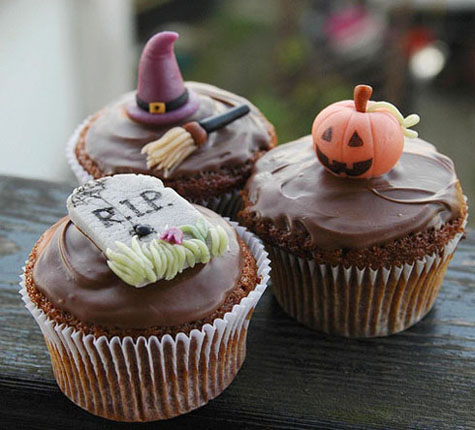
I emailed a friend this autumn. About how the Halloween themed October page on my cupcake calendar was really pissing me off. It was a cupcake with a gravestone on the top. Hmmmm. Death. Is it cute and yummy? Or scary and associated with ghouls and monsters? Is death frightening? Or is it something appetising and edible? Trivial or taboo? Awful or nothing to be afraid of?

Photograph by Maria Olejniczak

***

Just after Jessica, my surviving daughter, came home from hospital, a film came out on release in British cinemas and was trailed extensively on television. I came to hate this film, 'The Unborn.' Can you guess where this is heading? Something a bit spooky and unsettling appears to be happening? Check. Is there a hysterical woman? Check. You can bet they'll be a dead baby at the bottom of this one. And, let's face it, the title is a bit of a giveaway.

A young woman discovers she was (is) a twin. Her brother died in utero. And now she is haunted by the dead twin? Possibly? I'm not entirely sure from the rather confused plot synopsis I just looked up via Google and, for obvious reasons, I wasn't queuing up to see this film.

Because there is nothing like the repetitive screening of a trailer for a horror film to sneak up on you and remind you of what your life has turned into.

**** 

This strange dichotomy seems to put us in a bit of a bind. We are scary but we must also remain meek. Something to scream at that must also creep about, quiet as a mouse. 

We are terrifying. What has happened to us is so awful that it is wheeled out as an explanation for a multitude of sins. It is a frequently used plot device, the dead baby. It has been written about at Glow before, by far better writers than me, please see this wonderful post of Tash's here. Arson? Drinking too much? Suicide? Even, as in one extremely popular British soap opera, stealing someone else's baby? The motive? Yup. That's right. A dead baby.  

As someone with my very own, extremely personal, dead baby, I do sometimes wonder what people think of me. Do they think I'm eyeing up their babies, ready to make my snatch? That I'm drinking from secret bottles of gin secreted about my house? Crazily cackling over my box of matches? I know it's been a while since my daughter died but there is still time for the crazies isn't there? But, in reality, all I do is love her and miss her. And sigh quietly.

A fictitious dead baby stands in for unspeakable horror, an explanation for the most erratic and strange behaviour. One that might even afford the perpetrator some sympathy (although don't bet on that, poor baby-snatching-lady from the soap didn't get much here in the media) a real, honest-to-goodness, true life dead baby seems to be a different proposition. When they stop being a plot device and become a real child. My daughter, Georgina, who I loved and cared about. Not a handy explanation or short hand for why I'm so screwed up. It is, apparently, less easy to discuss her than it is a made up baby on a soap opera. I've had entire conversations about the dead-baby-mama-turned-baby-snatcher plot with people who have never once mentioned my own daughter. Although I know that they know that I have a personal interest in this storyline.

We don't talk about that. If this happens to you in real life you'd better not become unhinged. You can't even get away with being slightly angry in some quarters. Don't yell, don't even whisper. Don't tell anyone your feelings or you will be giving too much away. Bad enough that your baby died. Don't talk about it for heaven's sake. Don't have any feelings about it. Don't, whatever you do, write on the internet about it. Just keep quiet.

Scary. Scary and silent. Silent about the very thing that makes us scary. An odd corner to be painted into. One that I'm uncomfortable in.

Do you think that 'joe public' finds us scary? Do you ever feel scary?

 What are your feelings about the 'dead baby' plot device, that favourite of literature and film?

Why is talk about strong emotions, death, love or anything that really matters, so very unfashionable? Or is that just in the circles in which I move? For the purposes of full disclosure, I'm 32, British and move in circles composed of mothers with young children and/or people who like numbers and databases. Is it different where you are?


the laundry

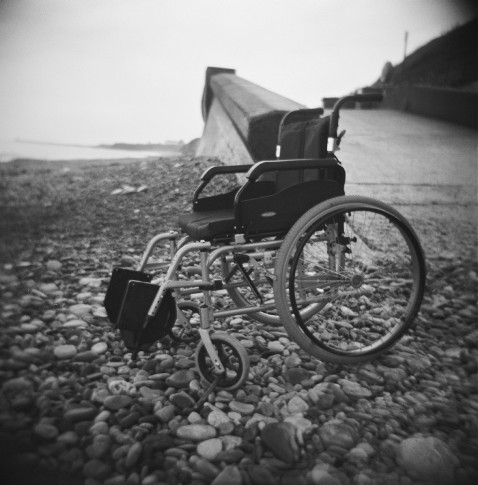
There is a craggy shore jutting around the beach. Just off  the edge of a sloping ramp, he parked over tumbled ocean rocks. My father sits in his wheelchair facing the sea. He always loved the sea. He turns and smiles at me. I stand in front of him, holding my arms out to him for leverage, but he waves me away. He stands and walks, navigating the rocks. He can walk. I can't believe it. He is healed. At night, I dream that my father can walk and that my daughter is alive. They are impossible dreams. Dreams borne of half-awake prayers that start as grounding but end in cures and resurrections and healing. He walks past me toward the wild sea, all white caps and the thunderous booms of water falling to earth. He stands before the ocean, glancing back at me before walking into the water, fully clothed, but free.


photo by RachelCreative.


I’m not sure if my father remembers that my second daughter died in my belly. But whenever I talk about how my baby died, my father cries. His sickness envelopes his body, wrenching his hand into a limp, unusable limb, seating him forever in a wheelchair. It took decades of slow torture, losing his abilities one at a time. His legs shake involuntarily like phantom remembrances of walking.

His emotions run closer to the surface now. He expresses, emotes, leaks tears despite himself. I hadn't seen my father cry until I was in my twenties, long after he was diagnosed with Multiple Sclerosis, then it seemed his crying wouldn't stop. I used to avoid making him cry. I turned away from him. It embarrassed me. I cracked a joke. But these days, it comforts me to see his humanity. It reminds me that this man is my father and I am his safe space, even though the crying is so unlike him.

He doesn't remember her name, or at least, he has never spoken her name aloud. He never has spoken of her. He has never asked me about the grief. He has never asked me how I am coping. He asks me how my new house is, even though I have been here for five years. But when I mention Lucy, he weeps. It is like he suddenly remembers. Or perhaps it is as though he is hearing it for the first time all over again. It is so sad that our baby died. He forgets, but when he hears about it, he knows it is sad.

The day after I returned from the hospital, after birthing my stillborn daughter, I called my father. I wanted him to hear my voice, to know that I was okay. I was obliterated, destroyed, yes, but I was alive and talking. When I told him the baby died, he cried. We cried together on the phone. A few minutes later, he asked me when I was coming to see him. He wanted to know when I was bringing his laundry to him.

I hung up and wept into my hands.

Birth, dead child, hemorrhoids, unused engorged breasts, no flowers, no funeral. My father still needed his clean clothes. He still needed his clothes. I didn't even begrudge him that. Even in our worst moments, we still need food, water, air, clothes. I just couldn't give him any of those things in those first weeks, particularly not clean clothes. I wept not because I was hurt, but I wept because I miss my father. I miss his health, his paternal advice. I miss all that he could have said to comfort me.

Resentment for the friends and acquaintances who said nothing was a wild, suffocating vine winding around my heart, squeezing out my compassion, clinging to my fear, bearing a bitter, inedible melon. Yet I have a vast well of patience and acceptance of my father. I suppose it is easy to have compassion for someone who is sick. To be forgiving and loving and compassionate to someone whose disease robs him of his memory, paternal instincts, and empathy. I sit cross-legged and send him compassion every day, even though twenty years ago, I wanted nothing like compassion for him. I wanted my anger. I liked my anger. But it softened after a few years, and transformed into a patient, unconditional love. That is what he gives me, unconditional love, given and received.

Last week, I heard a speaker talking about spiritual suffering. He asked the group, "If you are standing in line in a convenience store and a boy in a wheelchair cuts in front of us, would you lose your temper? Would you have words? Would you ask him to step outside? Or would you graciously give him a moment, gesture for him to take your place?" He remarked that most of us would be forgiving, compassionate, generous to the boy in the wheelchair. We all nodded. Then he asked why we don't treat everyone else in the world with the same compassion. What if you could see everyone as a spiritually sick? All the people who stepped in front of me in line, or cut me off in traffic, or berated me for one thing or another. Or those who couldn't manage a simple "I'm sorry" after the death of my daughter. What if I could see those people as spiritually helpless? Spiritually sick? Emotionally handicapped? What if I could treat everyone else as I treat my father?

After three years, I am only now getting to the point where my anger and unrelenting expectations of other's capability has softened. So much of my emotional forgiveness was spent on my father some days, I thought it sapped my reserve, as though tolerance and compassion were finite resources, quantifiable and conditioned. I wrapped myself in intolerance for people I deemed well enough to know better. Righteous indignation was my woobie, my excuse for not allowing people into my grief, to bear witness to my vulnerability, my weakness, my need for friendship and compassion.

I understand now that my father's gift to me after Lucia's death was needing me. He needed me to do his laundry. To get up and have someone to be accountable to, someone who was able to cry about how sad it was that my daughter died, but who still needed me to get up. He didn't see me as weak, absent, lacking, intolerant. He saw me as his strong, able daughter, bearing the brunt of daughter-death and father-caring. Or maybe he didn't remember her death, but perhaps that was a gift too.


Do you have different standards for support from your friends than your family? Do you expect more from your friends or family? Do you have anyone in your life who receives your patience and forgiveness despite their approach to your child(ren)'s death? What makes them different than others? 

i'm gone and i'll never look back again

Laying flat on my back on the couch surrounded by the darkness in my heart is how I have spent many bright days and long cold nights over the last three years since Silas died. I was not new to the idea of sadness and loss and hardship, but it was a revelation to be consumed by it so completely.

After all, there is nothing as completely devastating as the loss of your son or daughter.  We know our parents and grandparents are not immortal, but it seems like a given that our children will outlive us long and strong, healthy and true.

But now I know.

Silas's death transformed my guts.  I used to shit perfectly.  Once in the morning, once at night. Solid, honest craps each of them.  But now I'm erratic.  Sometimes the toilet sucks, and I know I'm not good when I'm not looking forward to that daily event.

Do you know the gurgles?  When laying flat on said back completely annihilated by how painful it is to miss my son I feel the slow crawl of tension mixed with terror sleazing through my innards in the dreadful, lonely night.  Lu is next to me so I'm not alone but the loss is endless.  Like the night will never end.  Like the gurgle slip-slithering through my insides will never end in a solid shit.

It is the gut-pit we all know.

It seems clear to me that all the sorrows of all that is known can fall endlessly into the despair that parents feel for the loss of our little ones.

Based upon my own experience, it really is that fucking bad.  You can't hyperbole the shitiness of this shit.

Our arms are made to hold them close, even when they are not here.

Here he is, though.  Absolutely present in my life.  My son Silas.  He exists more concretely in the typing of his name than in his physical existence.  I held him briefly hooked up to tubes and then later when it was only us, but I've held him even closer in the way I think about him, the way I write about my life without him.

I've learned to think in a certain way that seemed invaluable to survival.  Music was my first refuge.  I fell in love with music that made me feel Silas's absence with crystalline clarity.  After music it was laughter.  My brothers helped to remind me that bitter laughter is better than none at all.  And if I could find my way to open my mouth to speak or yell or maybe even laugh, then food and drink would surely find it's way in.

Look at me!  I'm a normally fuckitioning human.  Yeah that's right.  Fuck you functioning.  Good as fucking new.

Slowly I re-learned how to present a relatively normal facade, but always at the center of our focus was creating Silas's sibling.

~~~~~~~~~~~~

I write to you now from the other side.  Stop reading if you are angry about not having a child, or if your loss is so fresh everything is enraging.  Read that top part again, and keep fighting.  Don't let anyone stop you from being exactly who and how you need to be.  Do not stop.  Do not stop.  Get up, stand up, throw those fucking hands up.  Push out the night.  Hide from the daylight.  Embrace your endless, enraging tears for your child, your daughter, your son, your big sticky stinky shitting fucking life.

It's true, it really does suck this much, and it always will.  Always always always.  It will always suck exactly this much that you and me and my wife and your grandparents and our siblings lost a life that was going to be amazing.

~~~~~~~~~~~~~~~~~~~

Stop reading if you're not pregnant yet with your next child, of if you're in your pregnancy and are freaking out all the time like we were.  Stop reading if you're me a year ago and I couldn't stand to read about the next, bright part of people's lives.

I'm on a futon in the living room and Puck is digging his furry, feline head under the folds of my sleeping bag.  The detritus of baby surrounds me.  In what used to be my bedroom: my wife, the other cats, my second son Zephyr, all sleeping & feeding & crying & pooping as babies do, and sometimes moms and kitties, too.

I stopped believing in hope and now it's my full-time fucking job.  I hope he's okay.  I hope that rash is no big deal.  I hope he's not crying because he's deathly ill.  I hope I get to see him more tomorrow.

I have to hope, and I've trained myself to stop that silliness and deal instead with exactly is right in front of me.  Except now, what is right in front of me, in my arms, is a son I feared to hope for.

The gurgle is in my heart, now.  The gurgle is in my brain when I see Zeph's little-old-man-new face staring back at me, absurdly alive and utterly clueless to how powerful he is. He has annihilated time.  It reminds me of when we first lost Silas and day or night meant nothing at all.

It is so much better now.

I didn't want to write this part.  Lu thought it was necessary, though.  She wanted people to know that there is still always hope of some kind.  We were the worst kind of unlucky to lose our son Silas, but we are profoundly fortunate to have Zeph with us now.  She never let go of that possibility while I continued to prepare for exactly what was, every day, over and over again, no matter how shitty.

She's in there right now using her breasts to feed and grow our son.  I'm out here on the futon writing about our insanely brutal and beautiful and sad and hilarious lives as Airbag blasts from little speakers, my toes tucked into the sleeping bag and Chumby our cat curled up on the couch.  I will sleep tonight completely enraptured by the endless darkness of Silas's absence and the now-ever-present force that is my other son Zephyr who is brilliantly alive and utterly confounding.  How do we do this now?  How does anyone?

Okay, I hear tears.  Maybe time for a diaper change or midnight dance-party.  Different day, better shit.

What physical aspects of your life changed when you lost your child?  What have you reclaimed since then, what is forever altered?  Has the lack of physical connection with your lost child forced you to find other routes to feeling close to them?  What are they?  What else do you want and how will you get it?