at the kitchen table: ghosts and rituals

The holidays around the change from summer to fall are rife with ancestor worship, death, and touching the spirit-world. Samhain. Halloween. All Souls’ Day. Dìa de los Muertos. Something about the end of October conjures the thinness of the veil between the land of the living and the land of the dead. In many cultures we invite the dead into our homes, places of worship, and communities. We show lost loved ones a good time, with feasting, sweets, games, and offerings. And we prepare for visits from the unloved as well—the restless, unhappy, malevolent spirits who might pop by to instill fear, extract revenge, or just toilet paper our lawns. Frightening costumes are donned to “Boo!” them back across the veil. Communities light bonfires, or pumpkins, to fight the darkness, and to guide the path home for our beloved dead.

Even in this secular community of grieving parents, we use October to remember our children, grieve our losses and remind the world that we are still here. October 15 is National Pregnancy and Infant Loss Awareness Day. 

This month, we are sitting around the kitchen table talking about ghosts and rituals. Our answers are here. Want to join in? Post the questions and your answers on your own blog, link to us here at Glow in the Woods meme-style, and share the link to your post in the comments below. If you don't have your own online space, simply post your answers directly in the comments.

+++

1 | Do you believe you can communicate with people in the afterlife, or they with you?  Do you believe you can do this with your child?

2 | Do you believe in ghosts?  Has this changed since the loss of your child(ren)?

3 | Have your feelings changed about Halloween?  How do you respond to Halloween humor such as zombie and ghost costumes or macabre gravestones as decorations?

4 | Does your religious or cultural background have a day or holiday where the focus is honoring the dead? How do you use this experience to honor your own child(ren)?

5 | Do you ever reach outside of your spiritual/religious framework for comfort from other practices/religions?

6 | Is there a season or holiday, other than your child(ren)’s birthday, that inspires you to perform a ritual in memory of your child(ren)?

7 | Is there a ritual you perform everyday? Weekly? Monthly? Yearly?

8 | Do you perform any public rituals (in real life or online) on October 15? How do your friends, family, or community respond to your acknowledgment of loss?


(to comment and partipate, please leave your answers and/or link on this month's at the kitchen table page)

special powers

In the early days of shock and tears, my husband reached his last straw in trying to comfort me: she loves us—she would want us to be happy. I couldn’t believe him. It sounded so strange and wrong. She was dead, and a baby. How could she want anything for her parents? But he believed it. He felt her with him.

I haven’t heard from her in a long time. I could tell you that we once had a long talk, or that I saw the spiritual path her soul is on. But now those communication lines seem dead, so I fall back on logic. I say I don’t believe in signs, that my baby does not have special powers, and that she can’t communicate with us.

So have I become a rational creature now? Or are my feelings just hurt by the silence?

* * * * * *

Other parents see signs. In a precious moment, they notice clouds or rainbows or lightning bugs and think, this is for me from him or her, or my child has something to do with why this is so beautiful.

I envy that belief, because it eludes me. If I could see my daughter in the trees or hear her on the wind, maybe I would not be so lonely and angry. But it doesn’t work for me anymore. My child can’t be trying to contact me, because she is a baby. Not an angel. Not a fairy. A baby.  Her little fingers can’t operate the paranormal phone system. She can’t align the stars or send me a butterfly. She’s too little.

I don’t like hearing that she wants me to go on or wants me to know she is okay; that only points to my massive maternal failure. All she should be thinking about right now is snacks, cuddles, toys, and trying to pull herself up to standing. Not how to make Mom feel better. If she were alive, she would not want the best for me. She would want me to find her damn pacifier right now. That’s how I want it too. I want me to be the mommy, and her to be the baby. Still. Even though she’s dead.

And please God, or whoever is out there, do not let my baby be a ghost, wandering between this world and the next. Please let her be someplace safe.

* * * *

On the other hand, I have had messages. And I’ve imbued her with a very special power: the power to leave me.

In the hospital I began, irrationally, to worry that she did not like me very much. Her little face was so frowny, her lips so pouty. She looked mad. (Maybe they all look that way?) Holding her in my arms, this is what popped into my heart:

She needed unconditional love. Something bad happened to her, maybe in a past life, and she needed to know that Brian and I loved her absolutely purely. She wanted love untainted by the scoldings, power struggles, and tears that come with being a human child. By leaving us so early, she was assured of our white hot love forever. It would heal her, so her soul could go on. But it would break me, and I would have to accept it.

I had one visit from her after that. A friend did a spiritual healing on me a few weeks later; the smell of strawberries wafted through my living room on a cold March morning, and we both felt it was my baby saying hello. I could envision fields of the spindly green plants heavy with fruit, and how much my girl would delight in them. Later I planted a pot of hearty alpine berries and got a strawberry tattooed on my ankle, her name hidden in the leaves.

Since then, there has been silence. She feels utterly gone to me, and I feel rejected. I may say it is not her job to comfort me, yet I sit here like a spurned lover, hoping for the phone to ring. This is my deep dark secret—that I am kind of mad at my baby for dying. That I am kind of mad she never calls.
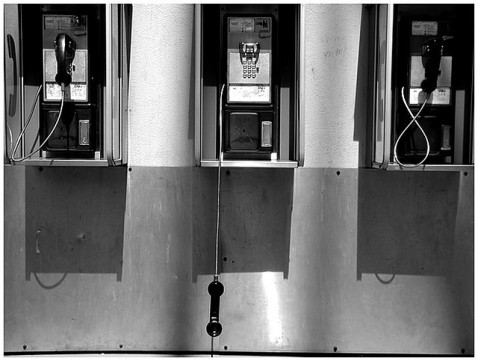
Photo by VanCityAllie

* * * * * * *

Why did I make up this terrible story about her needing to leave us? For a while it felt like a message from her soul, or from God or the great beyond. As the days have worn on, without answers, without comfort, my faith in most things of a spiritual nature has dissipated. Now I think it was just my brain trying to make sense of an incomprehensible event.

I’m not sure this was the best story to tell myself, though. It gives her the power to choose death over life. The power to abandon her parents. The power to hurt us intentionally. All of which is insane. She was a tiny baby inside my body. A very bad thing happened to her, and we don’t know why.

Maybe that’s just too much for my heart to take. I would prefer to think that she never wanted to be here, than to think she is out there in the dark crying for her mommy. I’d rather say that we do not get clouds and hearts and stars from her, because she’d rather be free. That’s easier to face than the plastic bag of ashes upstairs.  

Most of all, I need to believe that this experience is far worse for me than it is for her, because I just can’t stomach any other option.

So some days I try hard to think of her as happy. I try to see her as part of everything, reveling in the universe, sending love to our family every day. Usually I can’t. So instead I absolve her of all responsibility—it is one way communication down that parental, paranormal phone line. If she’s anywhere, I hope she can hear that I love her.

* * * * * * * *

Have you received signs or messages that help you connect to your child(ren)? Was there a particular window of time when you felt most connected that is now closed? What are the stories you tell yourself to help make sense of your loss(es)?  

stepping back

Anyone who knows me well knows that an email containing the phrase, “I am pleased to say that I surpassed even my own expectations,” would immediately turn me off. 

I’m not a big fan of blatant self-promotion. A bloated ego makes me cringe in the same way executives who wink at women do. Both apply here, and it’s just… ugh.

This particular chap at the office intends to recreate a fundraiser he initiated last Christmas that culminated with a visit to the local children’s hospital to hand out presents and hand over a big cheque. All well and good (minus of course the percentage of intentions that are shamelessly selfish). Except this year it’s within my remit to oversee stuff like this. And I know the hospital far too intimately, particularly the cardiac ward and PICU.

.::.

My memories of the place certainly haven’t faded - far from it. Instead they’ve morphed from shocking flashbacks and taken the alternate, slinky form of dreams and nightmares both.  There are still frequently nights when I relive the hours before and after Sadie died down to the minute. I can’t help it; I don’t know if that ever stops. In a crazy way I’m sure I’d miss it if it did.

I remember the smallest detail, down to the round metal buzzer we would press to gain entry into the ward. I’d say the same thing each time, “Hello, it’s Sadie McKay’s mother,” before hearing the door click and squirting a generous dose of antibacterial cream onto my palm as the door closed behind me. How I felt protective and dizzy and absolutely incredulous on the day we arrived via a silent, steady ambulance.

I remember walking out for the last time, and in a scene straight out of a hundred movies we’ve all seen, I stared from the backseat window as a woman ran to the car trying to reach us before we left, waving her arms at a driver who failed to notice her.  Our counsellor from the ward.  Her eyes locked with mine and I didn’t flinch. I knew I would hate her for whatever came out of her sad mouth beneath her very sad eyes.

.::.

Back to this jackarse with his ambitious plans to surpass even himself. 

Managing this would mean regular contact with the hospital and attending the event itself.  If I’m honest with myself, I can’t imagine a purer form of torture than having to go back there.  And a little part of me is disappointed in myself for that. I would love to be one of those women who takes on a cause because it’s close to her heart and puts her philanthropic urges to good use in the place where she lost so much, helping herself to heal and helping give hope to others. I’m sure you know someone wonderful and strong like that.  As much as I’d like to be, I don’t think I’m that woman.

.::.

What about you? Have you been back to the place where you lost your child? How did it feel?

shelf space

In the living room, on the end table, under the lamp, is a plaque commemorating the hundred trees that M.’s mother and stepfather had planted in Zoey and Gus’s memory.

Across the room, on the built-in shelf, are two large photographs: one of Gus’s name etched in the sand of an Australian beach, the other of Zoey’s.  The pictures were put there by my mother-in-law, who moved them to this place of prominence in the hours before we brought home Gus and Zoey’s siblings, Ben and Ellie. In each picture, the name appears beyond the reach of a wave that would lap it into nothingness, and underneath the sun as it gives a goodnight kiss to the horizon. Of course, this was only my assumption: that when the pictures were taken, it was just before night, not dawn.

In the den, on top of the bookcase, sits a wicker basket. The basket contains the rest of the physical evidence of Gus and Zoey: sonogram pictures, a hospital wristband, a receipt from the purchase of the baby furniture (and a receipt from the refund), condolence cards, and more. Some of it is gathered in the scrapbook M.’s mother began, not realizing that the one she bought matched the paper from our wedding invitations.  Some of it is not.

If the house were on fire, the basket may be the one thing I would save that is not a person or a dog. But on the days when there is no fire, it is something I don’t always think very much about. Something I see without seeing. On those days I see not the basket, but a basket-shape—a shape nestled among a vase-shape and box-shapes and oversized-stuffed-animal-shapes.

Still, inside the basket, there are a few objects I think about more often than the rest: six Polaroids of Gus and Zoey taken by the hospital after their deaths. Though closely related, these pictures are not like the company they keep in the basket. They are not sign-in sheets or parking medallions or the page torn from a hospital room’s wall calendar. They are not symbols or signifiers. They are the most direct evidence there is that our babies ever were.

---

Since Ben and Ellie’s births, I have taken approximately 2,400 pictures (although I am frequently reminded that many include, or are simply of, the dog). Of Gus and Zoey we have just three each. Worse still, they are not very good. They are cold and clinical and seem chemically unstable. As if being kept out in the light just extra moment would erase the likenesses entrusted to them. 

Polaroids of the dead. What else would you expect?

I last saw these images of Gus and Zoey the week Ben and Ellie came home. Almost a month earlier, during one of our last doctor’s visits, I remarked to M. that when these babies arrive, they will look huge. Consider our frame of reference, after all. But later, when M. was looking at the Polaroids—this time as a new mother—and I glanced down, I was staggered by Gus and Zoey’s smallness, by their fragility, even though they were already gone. In fact, for just a sliver of a moment, I did not realize I was looking at babies, let alone at my own. This was what Ben and Ellie had accomplished after just ten days of life: swapping their side of the prism for Gus and Zoey’s. 

Several times in those first weeks Ben and Ellie were with us, M. commented on how much Ben looked like Gus. Now she says Ben looks like me. As he fills in, his resemblance to Gus fades. And as the resemblance fades, the before-and-after line that separates the loss of one pair from the arrival of the other seems to grow wider and more impermeable. So I am making a place inside myself for a paradox: I have two sons, but my sons have no brothers.

We make places for lots of things.  We keep the physical ones—mementos, totems, emblems, symbols—because they are powerful.  But their power is not just the power to make us remember; it is the power to make real, if only for a moment, a space where two states overlap: the state of having and the state of once having had.


What objects embody the memory of your lost child or children? Does looking at them bring you comfort or refresh your grief? Were you surprised by any of the items you found meaningful and wanted to keep?


at the kitchen table: on ghosts and rituals

at the kitchen table: on ghosts and rituals

The holidays around the change from summer to fall are rife with ancestor worship, death, and touching the spirit-world. Samhain. Halloween. All Souls’ Day. Dìa de los Muertos. Something about the end of October conjures the thinness of the veil between the land of the living and the land of the dead. This month, Glow's regular contributors meet up at the Kitchen Table to chat about how we invite the dead into our homes, places of worship, and communities. Do we show lost loved ones a good time, with feasting, sweets, games, and offerings? How do we prepare for visits from the unloved as well—the restless, unhappy, malevolent spirits who might pop by to instill fear, extract revenge, or just toilet paper our lawns?

Read More

rain rain, stay

I love the weather.  I love how it creates and frames a day.
I love the approach of a storm.
Wind, rain and snow--hail even if need be--I relish the raw natural cacophony.
Tonight it pours and I appreciate the drenching.
Tonight the soggy cold fits my mood perfectly.
The thought and memory and internal existence of my lost son Silas is like the weather for me.
Some days I am bright and beautiful, filled with the overflowing abundance of everyday life.
Knowing loss and awfulness intimately I cherish even more the moments of truth and love.
Low pressure, light of being, effortless ease through the breezy afternoon.
Other nights I am dark and full of storms.  I cringe at the chill and dodge the sodden stream of rain.
Nothing lifts me up.
Nothing can cut that chain of despair.

And then there are nights like these.  Nights where I only know what I have.  Nights where I only know what exactly is true despite all arguments to the contrary.

His life and his death blow through me like pressure systems on a continent.

My hope and my failure, our dreams and our despair; they are the precipitations and condensations of facts caught in the currents of life;  they are the thunderheads and tornadoes of fear;  they are the beams of sunlight on his red, blazing tree.

I have no idea how to live this life anymore.  I thought there was a path, a way of being and regard for the Universe that I thought would get me all the way through, as long as I stayed true.

Not so.

There is only what there is and then there is everything you do with that and it is all up to you.

No one promised perfection, and if they did, as you know, they were lying.  The closestto perfection is knowing that right now, right here, there is nothing else and no other way to be.

These are our lives.  We make of them what we can, what we will, what we want.  Hopefully, what we hope.
All you can do is accept it or fight.
If you don't know already,
I regret to tell you
fighting against the Universe
is the most futile fight of all.

This is it.  There is rain and cold wind.  There are sunny days.
Sometimes the sun burns, other times it is the source that fills you with light and lifts you through the day.
Sometimes the rain drenches and soaks and floods you away.
Sometimes the rain helps you to grow.

I am always a little bit happy when I'm sad, because I can feel Silas so close.
Sometimes I am sad when I'm happy because I know it is not the way I want it to be.
Good enough is good enough to get me by, most of the time.
But when it is not, I drown, and I love that too because it proves that I am alive,
that he was too,
and most of all
that I will never forget his soul, even in the sun.  Even in the rain.  Even in the night.  Even in my dreams.  Even in my eyes.  Even on my skin.

Even, eventually.

Always.

I would love to read a stream-of-conscious prose poem or regular poem about your lost child, or how you feel about it, or anything you want.  Details, imagery, specific truths to you, please let them flow and put them on the page.  What do you feel today?  What does the weather say to you?  How do you connect to your lost child beyond regular words and sentences?