The most extraordinary life grows out of dead trees.
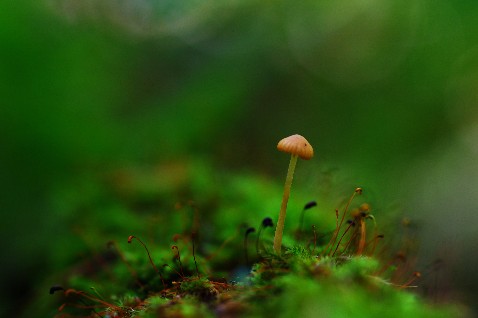
photo by reassaure.
Ferns and orchids. Lichen and fungi the color of absurdist paintings. Small toads find refuge under the decay. The forest bed swallows death into a loamy mound of old and new growth. A birch bark lies just beyond. It tells the tale of circles, births and deaths, the years unfurl. I hold it up, that shell of stability, the center falls out like rich soil. I whisper my story to the bark scroll. These words, masquerading as scratches on its old skin, appear on its shell.
My daughter died. I wrote the story out long after it served any usefulness. I wrote about how the grief was gone. No one read about my not-grief anymore. It didn't hurt to have people turn away. I would have turned away in my early months, but I kept writing through it. I would let go of the grief, and then pick it up again. Because since she died, it has always been about her death. Maybe before her death, it was about her death.
There were others who came before me, who reached back. A simple gesture, but monumental, I see now. They revisited their grief while abiding mine. They kept silent and listened to my story and so I did the same, until reaching back no longer served any one. My hands are empty now as my story unfurls. There is new life here. And my story must become part of the fertilizer of others.
I wrote longer than I should have. The reaching was for me, pulling my unforgiveness along, leaving bits of it on the forest to become something beautiful. For when I listened to the other stories, I became more forgiving of my own story, of my own culpability. I didn't kill her, yet I have spent nearly five years forgiving myself for her death. Only you understand that.
Nothing. Nothing can ever make Lucia's death okay. And nothing, not one thing, can ever bring her back. A paradox that no longer confounds me.
Grief is as changeable as the forest. You never trek in the same woods twice. And grief is the same. You never write about the same grief twice. There is awe and emptiness and a void of her that is unique and different in every moment. Yet what I write sounds the same, over and over, because I began looking back at my grief, rather than writing of the present grief. The present grief became the fabric of the forest, the greens in everything. It is still there, the grief, that is. It is my mistake to say that it is gone. It is just different. It is a gratitude, and a comfortability in this life, despite her death. In the early years, the writing became a way to not feel grief. I could explicate a sentence, diagram it, break it down. The words meant nothing but grammatical math. I felt something, but did not, or rather, could not feel the true weight of her absence. I made it pretty, wrote moss around it, wove nature into the story, but make no mistake, it was still daughter-death. Ashes and dead babies. Sterile hospital rooms and calls to funeral homes. Sisters never played with. Babies never cooed after. Three broken people trying to remake a family. Over and over again.
But then it would catch up with me, and I would feel that grief with the weight of a redwood, leaning on my back.
When a woman grieves alone in the forest, does she make a sound?
I made it a point to be heard when I was felled. I started forest fires, and shot off shitty emails and wrote angry blog posts indicted everyone for my solitary grief. I entangled the hearing with the reaching. My heart burst open, broken, bleeding, raw. And I keened.
THIS TERRIBLE, HORRIBLE THING HAPPENED TO MY FAMILY!
I screamed it. I would not be silenced so others could feel better about dead babies and grieving women and communities of people who spring up in the dark corners of the internet grieving their children that never lived. I would not be shamed because I painted it, or felt sad about never knowing my daughter, or wore my heart on my sleeve, or for starting a literary arts journal around the art of grief. Maybe all that happened for way too long, but it happened just the way it needed to happen.
Today, my grief is grown over. The Now of Angie exists, absent of raw grief and anger, simply because I wrote about it and cried in public and arted and complained and felt sorry for myself and felt gratitude and made people uncomfortable and only talked to grieving people for a while and lived moment to moment and created rituals around my grief and made thousands of mistakes. It happened because I grieved out loud, in front of God and everyone. When I fell in the forest, I made a sound. It was a terrible, beautiful, righteous sound only the bereaved understand.
I am walking away from the writing about Lucia's death, not because I couldn't keep writing or because I no longer grieve, but because my writing serves no one anymore. Least of all me. Felled by her death, the forest floor crept over me. Overtook me. And small writhing insects made a home in me, something flew away from the forest floor, others stayed. New life grew in me, out of her DNA which still lives in me.
She is dead. We are alive. This is the great noble truth of our family.
With immense gratitude, I share my last post with the Glow community. Thank you for abiding with me on this grief journey through the last almost five years, for loving me when I could not love myself, and for sharing your stories and babies with me. Through the next few months, I will be transitioning out of the role as editor as well. I am passing the reigns to Burning Eye. Her creative fire and inspiring words will carry this space for new parents walking this dark road, and as always, Merry will continue guiding the discussion boards with aplomb and compassion. Together, I know they will continue to stoke the fires of Glow in the Woods' warm welcoming circle of parents.
Tell me, then, about your grief. How have you been making noises about your grief? Are you feeling heard? Are any parts of your grief are grown over? And what still flourishes?


